
femininity as a performance
understanding the ways we can reconnect with our femininity while unpacking the tropes we confuse for womanhood

Pink bows. A closet full of the trendiest outfits. Little charms dangling from my purse.
Femininity, for as long as I could remember, was always represented as a performance. It was in the way a woman spoke, or the way she moved her hips as she walked. Femininity was directly correlated with how much effort a woman put into her appearance, or how she behaved around men. And a woman rejecting this performance was placed on the opposite side of the spectrum, labeled as boyish and “chill.”
So many of us who didn’t fit into the perfectly pink, stereotypical expression of femininity felt at a loss. What were we then, if not confused?
It’s taken me a long time to connect with my femininity, and I’ve had quite the epiphany. It was never about behaving “feminine,” whatever that even means. It’s about discovering and reconnecting with who we are as women at our core, and moving through life with that authenticity.

the disconnect with our femininity
Firstly, there’s something we need to clear up.
Femininity is who you are as a woman, not what you do to be seen as a woman. It differs from feminine energy, which is the manifestation of how we express our feminine.
Feminine energy is commonly associated with receptivity, intuition, emotional depth, creativity, and relational awareness. It values intuition and feeling as a form of intelligence. It considers rest to be productive, and connection a source of strength.
Growing up in a capitalist society that correlates success directly with productivity has had an immense impact on us women and how we connect with ourselves internally. The corporate world and its work week, flows seamlessly with a man’s hormonal cycle. Every day requires the same effort and capacity. Men don’t seem to mind it, but women are suffering silently.
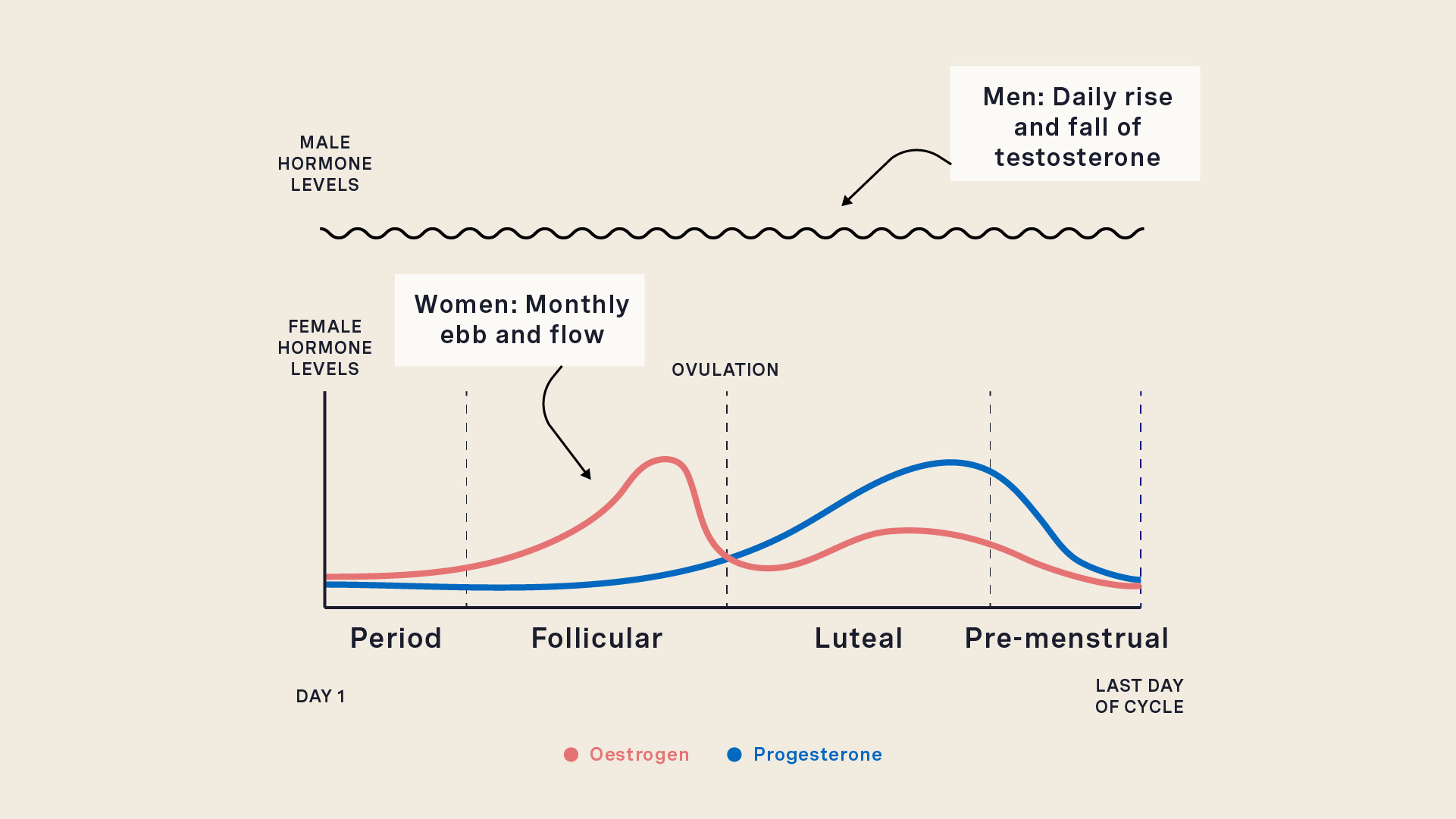
To be successful in today’s climate is to work, and work hard. No one teaches us that as women, we need to slow down and work with the needs of our bodies instead of despite them. If this interests you, there is a plethora of work around cycle syncing (meaning energy output according to your cycle) out there for you to explore.
Another crucial point is that our feminine energy reveals itself in safe environments. When a woman is stressed, overworked, or anxious, she won’t have the space to slow down and reconnect with her inner self. Our bodies don’t feel safe or relaxed, so why would our behavior reflect that? This speaks to an unfortunate circumstance that many women find themselves in today.
Women are overworked, stressed, and in a constant state of worry. Many men today do not facilitate a relaxed and calm environment for the women in their lives. If anything, many contribute to the stress a woman may feel. How common is it for husbands to work so their wives don’t have to, or create a beautiful environment of slowness and relaxation for the women in their lives?
All of this, and much more, contributes to the disconnect from and rejection of our innate femininity. But what if it didn’t have to be this way?

femininity is inherent, not performed
Each one of us carries our own set of traits, characteristics, and quirks. Our interests differ, as do our personalities. So where did we get the idea that our femininity should express itself in the same way, or that one expression trumps another?
Femininity begins before expression. It lives in the way we think, the way we feel, the way we perceive what’s around us. Simply by being women, we already possess an internal orientation toward the world that is distinctly our own and cannot be cosplayed or faked. It’s who we are. From this emerges its physical manifestation; how we show and express love, gratitude, anger, and frustration.
When we take the time to slow down and rediscover who we are, we build pathways for trust, intuition, and authenticity. It’s from these things that we, as women, can blossom in our femininity. And that’s why true femininity cannot be performed. It’s easy to replicate someone’s actions or change the way you dress or speak. But you cannot pretend to trust yourself. You can’t fake presence and authenticity. You can’t fake listening to your body and intuition.
Our expressions of femininity all differ depending on who we are…
If you’re quiet and introverted, you may place an emphasis on quiet observation and strengthening your intuition.
If you’re fiery and passionate, you may be more open and expressive, in turn building stronger emotional connections with others.
If you’re reflective, you may carry a deep intuitive strength that can guide you and others through life
If you’re independent, you might live with a strong sense of inner authority, with your receptivity being primarily inward.
None of these attributes trumps another. We are who we are. But it’s important that we uncover the depths of ourselves to reconnect with who we are as women.

the masculine and feminine existing islamically
Aisha reported the Messenger of Allah ﷺ said,
“The best of you are the best to their families, and I am the best to my family.” — at-Tirmidhī 3895
The Prophet (ﷺ) is a perfect example of a healthy masculine man loving women as they are…
Abu Hurairah (May Allah be pleased with him) reported, Messenger of Allah (ﷺ) said:
“Take my advice with regard to women: Act kindly towards women, for they were created from a rib, and the most crooked part of a rib is its uppermost. If you attempt to straighten it; you will break it, and if you leave it alone it will remain crooked; so act kindly toward women”. — Bukhari & Muslim
It’s widely understood that the Prophet smelled good and maintained a decent appearance for his wives. He also assisted his wives with household duties as well as mended his sandals and patched his garments.
Aisha (ra) described the state of the Prophet ﷺ in the home, saying
“The Prophet helps His wife with her work, and when prayer time arrives, He will go to prayer.” — Bukhari
Remember when I mentioned when a woman is in a space where she is supported, loved and cherished, she becomes the best version of herself? The Prophet truly was the best to His family, ﷺ.
اللَّهُمَّ صَلِّ عَلَى مُحَمَّدٍ وَعَلَى آلِ مُحَمَّدٍ

femininity is a gift
I have always been sensitive, selfless, and emotional. These were things I was raised to believe were weaknesses. Once I began reconnecting with myself and building a deep sense of inner trust, I saw how beautiful my traits could be. Yes, I’m sensitive and emotional, but feeling things deeply helps me understand and connect to how I feel. I am giving, and pulling strength from my femininity has taught me that fences make good neighbours, and that some things are worth keeping for myself.
When a woman is connected to her feminine, she sparkles, and makes everything around her sparkle too. Have you seen the homes of secure women? The people close to them? Like a candle, she ignites everything around her with the same beauty and love she feels internally. A woman in her feminine brings forth so many things: ideas, children, communities, and relationships. I once read that “femininity softens what is harsh and humanizes what is rigid.” How beautifully true is that?
It is through our femininity that we bear children and love them unconditionally. We become a home to what surrounds us because we live with so much love. How often do we crave the love of our mothers, or the company of our sisters and friends? Boys bask the love of their mothers, only to grow into men and crave the love of a woman. Femininity is a gift to everyone. We must learn to see it that way.
if you’d like to join others in supporting my publication monthly, consider buying me a coffee or becoming a paid subscriber below :)
As salaamu alaykum sister. I really enjoyed reading this. And I couldn’t agree more.
I’ve been offline for a long time and when I came back to social media I’ve noticed this weird performative femininity too. It felt unnatural and unauthentic. I don’t know how else to describe it besides that.
What’s funny is I’ve been in Egypt for nearly a year and been studying with many different sisters from many different countries. I’ve noticed the sisters from certain parts of the world namely Uzbekistan, Tajikistan, and some parts of Russia were very different than the sisters I would see on social media or around me. They weren’t performative at all. There was something about them that felt authentically feminine. And it wasn’t the clothing they wore bc most of the time we were in all black but the way they carried themselves. And likewise their men.
When I would see them in the street or marketplaces, I noticed they seemed a lot more masculine than the men in the west. It’s subtle, but undeniable.
So after reflecting, I realized that the Muslims from those countries (the lower key countries, when they have strong Muslim identity and are not too big on social media) are closer to their fitra. When I told this to my family, they said it’s likely bc they live more traditionally lives, specifically in those countries. They are farmers who grow their own food , live slower lives etc.
In the west, I feel as though both the men and women were indoctrinated young with feminism. Women thinking they are equal to men and fighting for the cause until they became tired. While the men were afraid of simply being men.
I’ve noticed lately, especially on social media, that both men and women seem fed up and are trying to return to older norms. Women talk about wanting a softer, slower life, and men are leaning into masculinity again, gym, discipline, MMA, all of that.
But at the same time, the way this lifestyle is being packaged online feels off. The femininity and masculinity courses, the perfectly curated lives influencers show, it all feels like another version of coping. Everyone is performing instead of actually living it, which is why it all feels so fake.
I love this! this is so important to keep in mind as a Muslim woman because often showing your personality that doesn't fit into the Islamic standard people have made up is often labeled as having "no haya" when it is just our own personality??
and like you mentioned we have the many examples of the sahabiyaat who were all uniquely different and they weren't critiqued for their differences.